Manual Citrus Juicer With Built-In Strainer
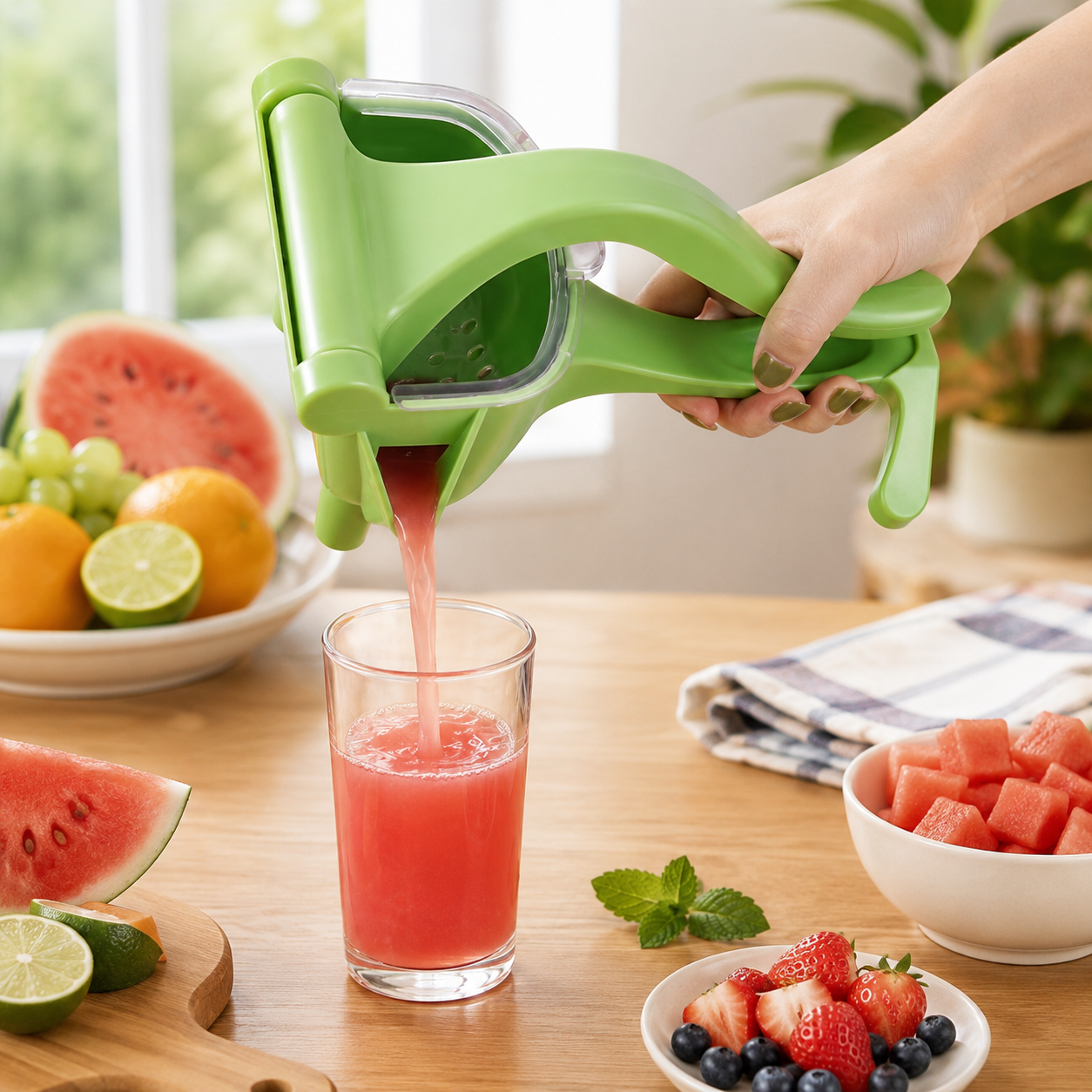
This manual juicer makes it easy to extract juice from lemons, oranges, and smaller pieces of soft fruit without the use of electricity or batteries. The fruit is placed in the juicing container, after which the long handle is pressed down to create even pressure. The juice flows through the built-in strainer and out through the spout, allowing it to be collected directly in a glass, bowl, or smaller container.
The handheld design makes the juicer suitable for both everyday cooking and serving. It can be used when adding freshly squeezed citrus juice to beverages, dressings, marinades, desserts, or other recipes. The product is made of plastic and combines the juicing function, strainer, and spout into one compact kitchen tool.
Key Benefits
- Manual juicing function without the need for electricity, cords, or batteries.
- Long handle provides a practical grip during juicing.
- Built-in strainer helps keep pulp and seeds back.
- Spout directs the juice straight into a glass or bowl.
- Suitable for lemons, oranges, and smaller pieces of soft fruit.
- Compact kitchen tool that is easy to bring out as needed.
Overview
This manual juicer is designed as a hinged hand press with a deep container for the fruit. When the handle is pressed down, the juicing part moves against the fruit and extracts the liquid. The juice passes through the strainer while larger residues remain in the container. The integrated spout allows for pouring or pressing the juice directly into the chosen container.
The design is particularly practical when a smaller amount of fresh juice is needed, and there is no need to find an electric juicer. The tool can be used at the kitchen worktop, dining table, or other places where there is a stable work surface.
| Product Type |
Manual Juicer and Citrus Press |
| Operation |
Handheld Juicing Function |
| Material |
Plastic |
| Filter |
Built-In Strainer Insert |
| Outlet |
Integrated Spout |
| Power Supply |
Does Not Require Electricity or Batteries |
| Suitable For |
Lemons, Oranges, and Smaller Pieces of Soft Fruit |
| Usage |
Juice, Dressings, Marinades, Beverages, and Cooking |
| Quantity |
1 pc. |
Press Juice Directly Into the Glass
The spout is located at the bottom of the juicing container and directs the liquid away from the fruit during use. A glass or bowl can be placed under the spout before the handle is pressed down. This makes the process simple, as the juice does not first need to be transferred from a separate collecting container.
The built-in strainer also helps to sort out larger fruit residues. The amount of pulp in the finished juice can vary depending on the type of fruit, ripeness, and how finely the fruit is cut. Seeds and larger pieces should be removed from the strainer between presses so that the liquid can continue to flow freely through the openings.
How to Use the Manual Fruit Press
Wash the fruit and cut it into pieces that fit in the container. For citrus fruits, the peel can be removed or the fruit can be halved to lie stable under the juicing part. Place the juicer over a glass or bowl with the spout directed towards the centre of the container.
Place the fruit in the strainer insert, hold the tool steady, and gently lower the handle. A controlled pressure makes it easier to keep the fruit in place and limits splatter. Release the handle, open the juicer, and remove the residues that remain. Repeat the process until the desired amount of juice is extracted.
Avoid overfilling the container. Smaller portions allow the juicing part to make better contact with the fruit and make it easier for the juice to pass through the strainer. Very hard fruits, large seeds, and frozen ingredients should not be pressed, as they can strain the hinge and juicing surfaces.
For Beverages and Cooking
Freshly squeezed lemon or orange juice can be used directly in water, tea, cocktails, and other beverages. The juice can also be included in vinaigrettes, marinades, sauces, glazes, and desserts. For smaller recipes, the manual operation provides good control over the amount, as one piece of fruit can be pressed at a time.
The juicer can also be used for selected smaller pieces of soft fruit. The fruit should be ripe and cut to a size that fits the container. The result depends on the fruit’s juice content and structure, and some types of fruit will leave more pulp in the strainer than citrus fruits.
Cleaning After Use
Clean the tool shortly after juicing, before the fruit juice and pulp dry on. Remove residues from the container and strainer insert, and rinse all accessible surfaces with water. Use a soft dish brush or sponge around the strainer openings, spout, and hinge.
Open and close the handle during cleaning so that the areas around the moving parts are rinsed. Allow the juicer to dry completely in an open position before storing it away. Avoid sharp tools and abrasive cleaning agents that can scratch or damage the plastic surface.
Practical Handling at the Kitchen Worktop
The curved handle provides space for the hand and allows for pressing with a combined motion. Always keep both the handle and collecting glass steady during use. Work on a flat surface and ensure that the spout is positioned correctly before increasing pressure.
Compact Alternative to an Electric Juicer
This handheld citrus press combines juicer, strainer, and spout into one tool. It requires no electrical connection and is therefore practical for quick kitchen tasks where only a small portion of juice is needed. After use, it can be cleaned and stored with other kitchen tools without the need for cords or accessories.






 Free delivery on orders of £5 or more
 14-Day Full Returns
 100% Secure Payments